Science: Understanding Our World Through Curiosity, Evidence and Discovery
Science begins with curiosity. A guide to evaluating sources, understanding study designs, separating correlation from causation, reporting discovery without sensationalism and connecting local science to community life.
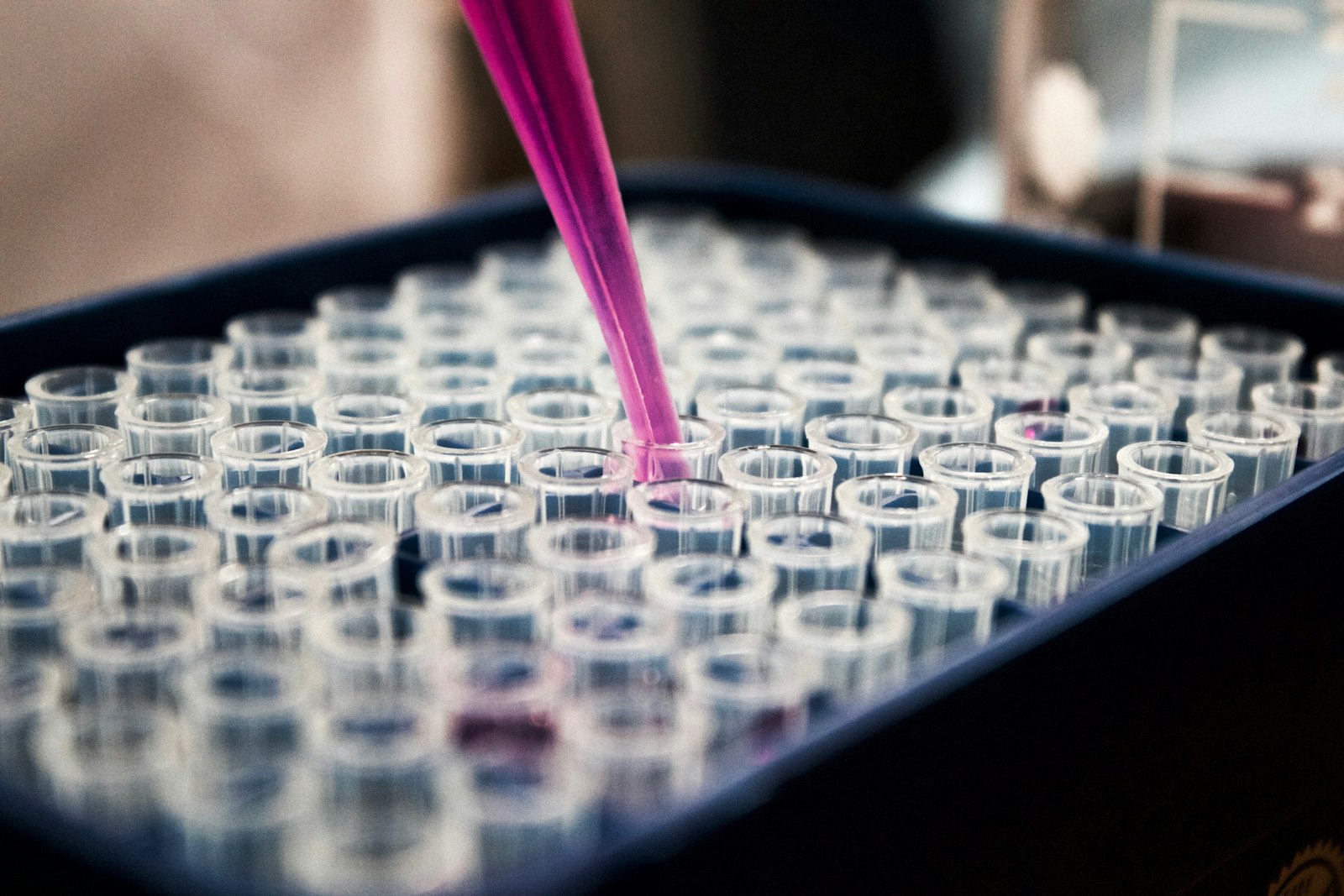
Science begins with curiosity.
Why does the sky change color? How does a seed become a tree? What causes disease? Why do some materials conduct electricity? How old is a rock? What makes weather change? Can a damaged ecosystem recover?
Questions like these have inspired generations of observation, experimentation and discovery. Science gives us a structured way to explore them—not by relying only on opinion or assumption, but by gathering evidence, testing ideas and allowing knowledge to improve when better information becomes available.
Science is not limited to laboratories or universities. It is present in our kitchens, farms, hospitals, schools, homes, smartphones, transportation systems and natural surroundings.
Through SocialPulse®, communities can discover scientific knowledge connected to their own locations, learn from qualified experts, document local observations and share responsible, evidence-based stories.
Science Belongs to Everyone
Scientists conduct specialized research, but scientific curiosity belongs to every person.
A child comparing leaves is practicing observation. A gardener testing different growing conditions is conducting a simple experiment. A mechanic diagnosing an engine problem is applying principles of physics and engineering. A cook observing how heat transforms ingredients is working with chemistry. A farmer studying soil, rainfall and crop health is using biological and environmental knowledge.
Science becomes more inviting when people can connect it with familiar experiences.
SocialPulse® can help make these connections by organizing scientific information according to both subject and place. A reader might explore:
- Astronomy in their region
- Wildlife in their neighborhood
- Geological formations in their state
- Water quality in their county
- Medical research at a nearby university
- Agricultural studies affecting local farmers
- Engineering projects in their city
- Weather patterns around their town
- Environmental restoration in a local watershed
This approach turns science from an abstract subject into a living part of community life.
How the Scientific Process Works
There is no single procedure used for every scientific investigation, but many studies follow a general pattern:
Observe something interesting or unexplained.
Ask a clear question.
Review what is already known.
Develop a testable explanation or hypothesis.
Gather information or conduct an experiment.
Analyze the results.
Compare the findings with the original expectation.
Share the methods and evidence.
Invite review, replication and further study.
Revise the explanation when stronger evidence appears.
A scientific conclusion is valuable not because an authority declares it true, but because the methods and evidence can be examined.
Different branches of science use different tools. An astronomer may analyze light from distant stars. A geologist may study rock layers. A medical researcher may conduct carefully controlled trials. An ecologist may observe a habitat over many years. A social scientist may use interviews, surveys or population data.
The methods must fit the question being studied.
Scientific Knowledge Can Change
People sometimes interpret a changing scientific recommendation as proof that science is unreliable. In many cases, the opposite is true.
Science is designed to improve.
Early findings may be based on limited data. New instruments may provide more precise measurements. Larger studies may reveal patterns that smaller studies could not detect. Other researchers may reproduce a result, challenge it or identify limitations.
- A responsible science article should explain:
- What researchers studied
- How the study was conducted
- How many subjects or observations were included
- What the results showed
- What the study did not establish
- Whether the findings have been replicated
- Who funded the research
- How the findings compare with existing knowledge
Words such as "may," "is associated with" and "requires further study" are not signs of weakness. They communicate the actual limits of the evidence.
Correlation Is Not Always Causation
Two things can occur together without one causing the other.
For example, a study may find that people who follow a particular habit have a lower rate of a health condition. That does not automatically prove the habit produced the difference. Age, income, diet, environment, healthcare access or other factors may have influenced the result.
This is the difference between correlation and causation.
Headlines often remove this distinction. "Associated with" becomes "causes," and a preliminary observation becomes a dramatic promise.
SocialPulse® science contributors should avoid exaggerating findings. When a study identifies an association, the article should describe it as an association unless the research supports a causal conclusion.
Accuracy builds more trust than excitement created by misleading claims.
Evaluate the Quality of a Source
Not every scientific-looking claim is supported by credible evidence.
Before sharing a claim, consider:
Who created the information?
What qualifications or expertise do they have?
Is the original research available?
Was the work reviewed by other specialists?
Are the methods explained?
Are limitations acknowledged?
Do other reliable sources support the conclusion?
Is the headline more dramatic than the evidence?
Is someone using the claim to sell a product?
Has the study been corrected or withdrawn?
- Useful sources may include:
- Universities
- Government science agencies
- Recognized research institutions
- Scientific academies
- Professional associations
- Museums
- Established peer-reviewed journals
- Public-health authorities
A university affiliation or technical vocabulary does not guarantee that every claim is correct. Evidence should still be examined carefully.
Whenever possible, a SocialPulse® article should link to the original study or authoritative source instead of relying only on a press release, social post or secondary summary.
Understand Scientific Studies Before Reporting Them
Different study designs answer different kinds of questions.
Laboratory Studies
Laboratory research allows scientists to control conditions and examine mechanisms closely. However, results from cells, tissues or animals may not produce the same effects in people or natural environments.
Observational Studies
Researchers observe what happens without assigning participants to particular conditions. These studies can identify important patterns but may not prove cause and effect.
Controlled Trials
Participants may be assigned to different groups so researchers can compare outcomes. Well-designed controlled trials can provide strong evidence, but their relevance may still depend on the participants, duration and methods used.
Reviews and Meta-Analyses
These studies evaluate findings from multiple earlier studies. They can provide a broader understanding, although their quality depends on the research included and the methods used to combine it.
Case Reports
A case report may describe an unusual event involving one person or a small group. It can identify a question worth investigating but generally cannot establish how common something is or prove a broad claim.
Science reporting should clearly identify what kind of evidence is being discussed.
Make Science Local
Major discoveries receive international attention, but local science can have an immediate effect on people's lives.
- Communities may follow research related to:
- Drinking water
- Air quality
- Soil contamination
- Flood risk
- Coastal erosion
- Crop disease
- Public health
- Renewable energy
- Wildlife populations
- Transportation safety
- Earthquake preparedness
- Waste management
- Building materials
- Local archaeological discoveries
Every science article on SocialPulse® can be classified by both geography and category.
A report about a river, for example, might connect to the river's page, surrounding towns, county or district, state or province, environmental topics, local history and NaturePulse. Agricultural research could also connect with FarmersPulse and FoodPulse.
This Place × Category structure helps readers discover how a scientific issue affects their own community while allowing local observations to become part of a wider story.
Recognize the Institutions Behind Discovery
Science is carried forward by people and institutions.
- SocialPulse® can create pages highlighting:
- Universities and colleges
- School science programs
- Research laboratories
- Science museums
- Planetariums
- Botanical gardens
- Zoos and aquariums
- Hospitals and medical-research centers
- Agricultural research stations
- Environmental organizations
- Technology incubators
- Public science agencies
- Community science groups
These pages can include histories, research areas, educational programs, public events, notable discoveries and opportunities for students or volunteers.
Scientists, teachers, technicians, fieldworkers and community contributors should receive appropriate recognition. Discovery is rarely the work of one person alone.
Encourage Community and Citizen Science
Citizen science allows members of the public to contribute observations or measurements to organized research and conservation efforts.
- Projects may involve:
- Counting birds
- Monitoring butterflies or pollinators
- Recording rainfall
- Measuring local temperature
- Testing water under supervised protocols
- Mapping trees
- Photographing coastal change
- Tracking seasonal flowering
- Identifying invasive species
- Documenting light pollution
- Classifying astronomical images
- Recording wildlife sightings
NaturePulse's planned Living Museum can support community observations using information such as date, time, location, habitat, photographs and identification status.
However, collecting information is not automatically the same as conducting scientific research. Reliable projects require clear methods, suitable tools, careful data management and appropriate review.
Contributors should follow the protocols established by the project they are supporting. Measurements gathered by different methods may not be directly comparable.
Keep People Safe During Field Activities
Scientific curiosity should never place contributors, wildlife or communities at unnecessary risk.
Field participants should:
Follow local laws and property boundaries.
Obtain permission before entering private land.
Keep a safe distance from wildlife.
Avoid unstable cliffs, floodwater and dangerous terrain.
Wear appropriate protective equipment.
Never handle unknown chemicals or biological materials.
Avoid tasting unidentified plants, fungi or substances.
Follow laboratory and collection protocols.
Protect the locations of vulnerable species.
Report urgent hazards to the proper authorities.
Children should participate with appropriate adult supervision.
Community members must not approach storms, fires, damaged power systems, polluted water or other hazards merely to obtain photographs or measurements.
Separate Science From Medical Advice
Health and medical discoveries are among the most widely shared—and frequently misunderstood—science stories.
A report about a new treatment, diet, supplement or diagnostic test should not be presented as personal medical advice.
- Responsible health-science reporting should clarify:
- Whether the research involved people, animals or laboratory models
- The number and characteristics of participants
- Whether the findings are preliminary
- Known risks and limitations
- Whether a treatment has received regulatory authorization
- Whether researchers identified conflicts of interest
- What additional research is required
Readers should consult qualified healthcare professionals about personal medical decisions. They should not stop medication, begin treatment or change a care plan based only on a blog article or social-media post.
Extraordinary health claims deserve especially careful verification.
Use Numbers Honestly
Statistics can clarify a discovery, but they can also create a misleading impression.
Suppose a risk increases from one person in 10,000 to two people in 10,000. Describing this only as a "100 percent increase" sounds dramatic while hiding the small absolute difference.
- Good science reporting may explain both:
- Relative change: how much a number changed proportionally
- Absolute change: the actual difference in frequency
Writers should also distinguish between average, median, percentage, rate and total number. Charts should begin at appropriate scales and should not visually exaggerate small differences.
If uncertainty or a margin of error is important, include it in plain language.
Report New Discoveries Without Sensationalism
Headlines such as "Scientists prove," "miracle cure," "complete breakthrough" or "everything we knew was wrong" should be used only when the evidence genuinely supports such statements—which is rare.
A trustworthy headline should reflect the strength of the research.
Instead of writing: Scientists Discover a Food That Prevents Disease
A more accurate headline might be: Early Study Examines a Possible Association Between the Food and Lower Disease Risk
The second headline may appear less dramatic, but it tells the reader what the research actually found.
SocialPulse® should value credibility over clicks.
Address Misinformation Respectfully
Scientific misinformation spreads quickly when it appeals to fear, anger or hope.
Simply insulting people who believe an inaccurate claim rarely helps. A more constructive response is to:
State the verified information clearly.
Explain where the incorrect claim originated.
Show what evidence is missing or misunderstood.
Link to reliable sources.
Acknowledge legitimate uncertainty.
Correct the claim without attacking the person.
Corrections should be visible. If an article changes because new evidence emerges or an error is discovered, the page should explain what was updated and when.
Trust grows when publishers are willing to correct themselves.
Use Artificial Intelligence Responsibly
Artificial intelligence can help people explore scientific information, translate technical language, organize research and identify possible connections.
It can also produce incorrect citations, invented facts, oversimplified conclusions and confident-sounding misinformation.
When AI assists with science content:
Verify every important factual claim.
Confirm that cited studies actually exist.
Check quotations against original sources.
Review calculations independently.
Identify AI-generated images or simulations.
Do not present an AI suggestion as expert verification.
Protect confidential or personally identifiable research data.
Include qualified human review for high-stakes subjects.
AI should assist scientific communication, not replace evidence, researchers or professional judgment.
Invite Scientists and Educators to Contribute
- Researchers, teachers and students can make science more understandable by sharing:
- Plain-language explanations
- Local research updates
- Laboratory profiles
- Classroom projects
- Field observations
- Interviews with scientists
- Museum and planetarium guides
- Questions for community investigation
- Career and scholarship information
- Public lectures and science events
Technical knowledge is most valuable to the public when it is communicated clearly without sacrificing accuracy.
Contributors should disclose affiliations, funding relationships and relevant conflicts of interest. Promotional material should be labeled clearly and should not be presented as independent research.
Inspire the Next Generation
A young person may discover an interest in science through a telescope, garden, microscope, museum visit or conversation with a teacher.
- Communities can encourage that interest by supporting:
- School science fairs
- Robotics and coding clubs
- Nature observation programs
- Astronomy nights
- Museum visits
- Mentoring
- Laboratory tours
- Agricultural demonstrations
- Environmental restoration
- Student research presentations
- Internships and scholarships
SocialPulse® can help publicize these opportunities geographically so families can find programs near them.
It can also preserve student discoveries and community projects, with suitable permission and privacy protection, as part of a place's educational history.
Build a Community Record of Discovery
Scientific knowledge is global, but every discovery happens somewhere.
A fossil is uncovered in a particular landscape. A medical study is conducted at an institution. A new species is documented in a habitat. An engineering solution is tested in a city. A student builds a project in a school. A farmer observes a crop change in a field.
By connecting science with people and place, SocialPulse® can create a richer record of how knowledge develops and how it affects communities.
The goal is not to give every opinion equal scientific weight. The goal is to welcome questions, preserve observations, explain evidence clearly and distinguish between what is known, what is uncertain and what still needs investigation.
Ask Questions, Examine Evidence and Keep Learning
Science does not ask us to stop questioning. It teaches us how to ask better questions.
Observe carefully. Look for reliable evidence. Compare sources. Understand limitations. Welcome corrections. Respect expertise while remaining curious. Share discoveries accurately and give credit to the people and communities behind them.
Through SocialPulse®, local science stories can connect with education, health, nature, weather, agriculture, food, technology and history—creating a network of knowledge organized around both subject and place.
Every question can begin a journey of discovery.
Every responsible observation can add to human knowledge.
And every community deserves the opportunity to understand and participate in the science shaping its future.