Small Towns, Big Perspectives: What Santorini Taught Me About Living Simply
The smell hits you before the view does. Standing on the caldera path between Fira and Imerovigli at six in the morning, before the first ferry horn echoes across the volcanic bay, there's salt and wild thyme and something faintly mineral —
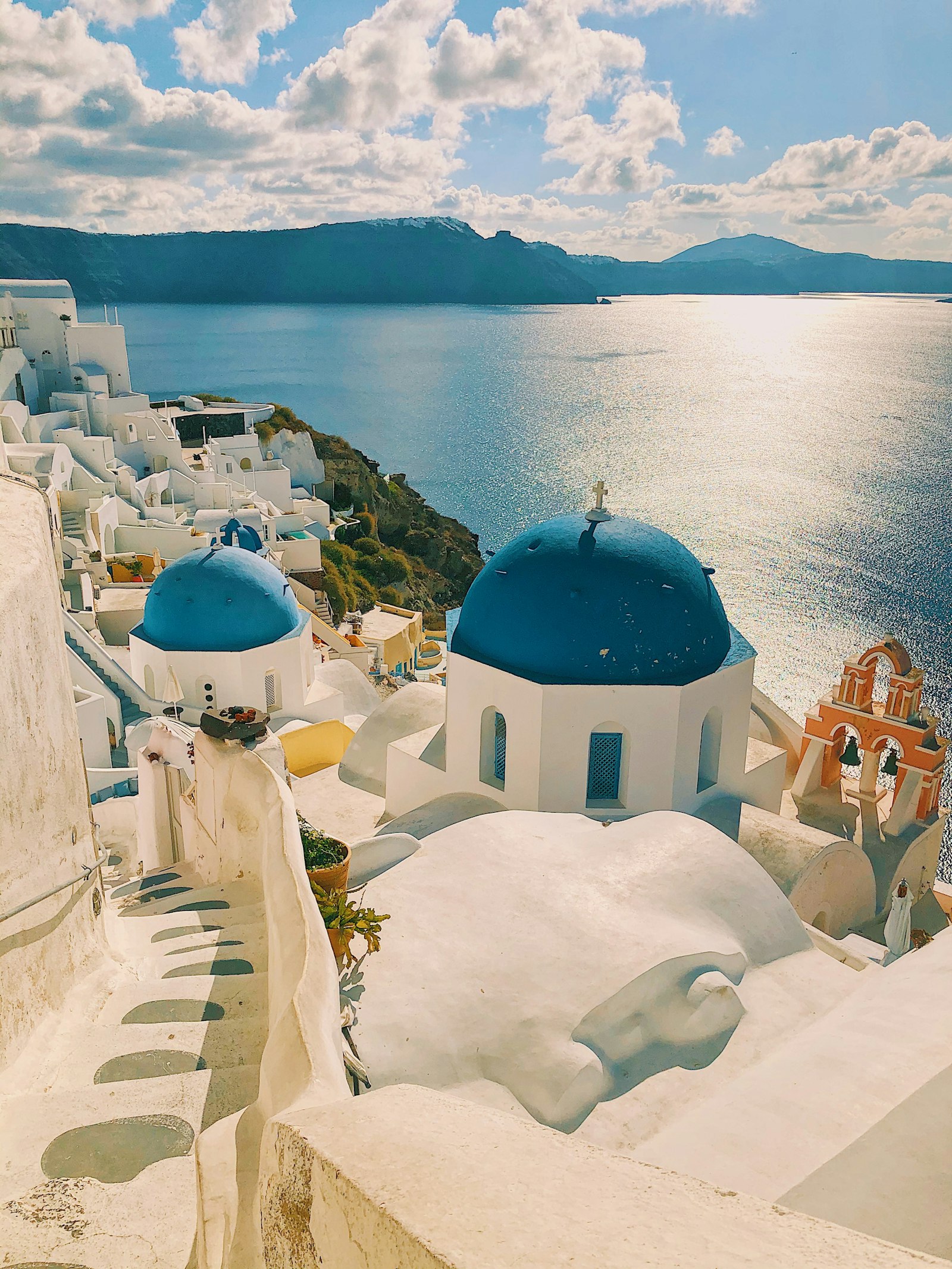
The smell hits you before the view does. Standing on the caldera path between Fira and Imerovigli at six in the morning, before the first ferry horn echoes across the volcanic bay, there's salt and wild thyme and something faintly mineral — the breath of pumice cliffs that have been cooling for thousands of years. No one is photographing the moment. No one else is even there. And somehow, that absence is the whole point.
Architecture as a Teacher
Cycladic design was never meant to be aesthetic. The thick whitewashed walls of Oia's cliff-side homes — called yposkafa, dwellings carved directly into the volcanic rock — were built to regulate heat, not to appear on magazine covers. Ceilings arc in barrel vaults because it was structurally efficient, not photogenic. Blue domes weren't chosen for contrast against the Aegean; the pigment was historically cheap and locally sourced. When a building is shaped entirely by necessity and climate, something interesting happens: it forces the people inside it to move slowly. Doorways are low. Staircases are steep and narrow. You cannot rush a place that was never designed for rushing.
I learned this the hard way, dragging a roller suitcase up 200 steps from the old port in Fira, past donkeys with patient eyes and cats that owned every landing. By the time I reached my room, I had already surrendered to the island's pace.
The Sunset Ritual — and What Happens Before It
Everyone knows about the Oia sunset. Crowds gather along the castle ruins by five o'clock, phones raised like a field of offerings. What fewer people talk about is the hour before that — when the light goes amber and flat and the bougainvillea along the winding caldera path seems to hold its color differently. Local families appear. Old men pull chairs outside kafeneions. A grandmother shakes a tablecloth from a window three stories above the path. The ritual belongs to them first, and to visitors only if they're quiet enough to witness it rather than perform inside it.
There is a version of Santorini that has nothing to do with the one sold in travel brochures. You find it by arriving early, staying late in the season, or simply walking in the wrong direction.
The Villages That Remember Themselves
Rent a car — or better, a scooter — and drive south. Emporio and Pyrgos sit inland, away from the caldera's drama, and they are startlingly, wonderfully ordinary. In Pyrgos, the medieval kasteli neighborhood spirals upward in concentric rings of stone houses, originally designed so that every outer wall acted as a defensive perimeter. Today those walls hold herb gardens and a small church whose bell rings whether or not anyone is listening. In Emporio, the goulas watchtower stands at the village center, and the bakery nearby — family-run for decades — sells melomakarona and fanouropita from a glass case with hand-lettered labels.
These villages receive a fraction of Oia's foot traffic. That ratio is worth thinking about.
Ferry Rhythms and the Question of Sustainability
The Blue Star ferries that connect Santorini to Piraeus and the other Cyclades run on a schedule that the island quietly organizes itself around. Locals know when the big boats dock. Shopkeepers restock. The port road at Athinios gets briefly chaotic, then settles. There's an honesty to that rhythm — commerce and community visibly linked — that disappears when an island absorbs more visitors than its infrastructure was built to hold.
- Visit between late October and early April if your schedule allows — many family-run guesthouses stay open and offer significantly more personal hospitality.
- Eat where there's no English menu displayed outside — a reliable heuristic in Fira's back streets.
- Take the local bus (KTEL) between villages instead of taxis; it runs on island time and introduces you to the people who actually live here.
- Linger in Pyrgos and Emporio — spending money there rather than only in Oia distributes tourism benefit more equitably across the island's communities.
What the Walls Actually Say
Simple living isn't a philosophy you adopt in Santorini. It's something the island imposes, quietly and without negotiation, through narrow paths and unhurried mornings and bakeries that open when the baker is ready. The whitewashed walls don't reflect sunlight so you can photograph them. They reflect it so the house stays cool. There's a lesson in that kind of purpose — beautiful because it's useful, not useful because it's beautiful.
Have you found a quieter corner of a famous destination that changed how you travel? Or maybe you've been to Emporio or Pyrgos and want to share what you discovered there? Drop your experience or question below — this community is at its best when we learn from each other's detours.
Discussion
ChatsPulse · 0 threads